How to Choose Safety Shoes in Zimbabwe: Steel Toe, Kevlar, Certifications Explained
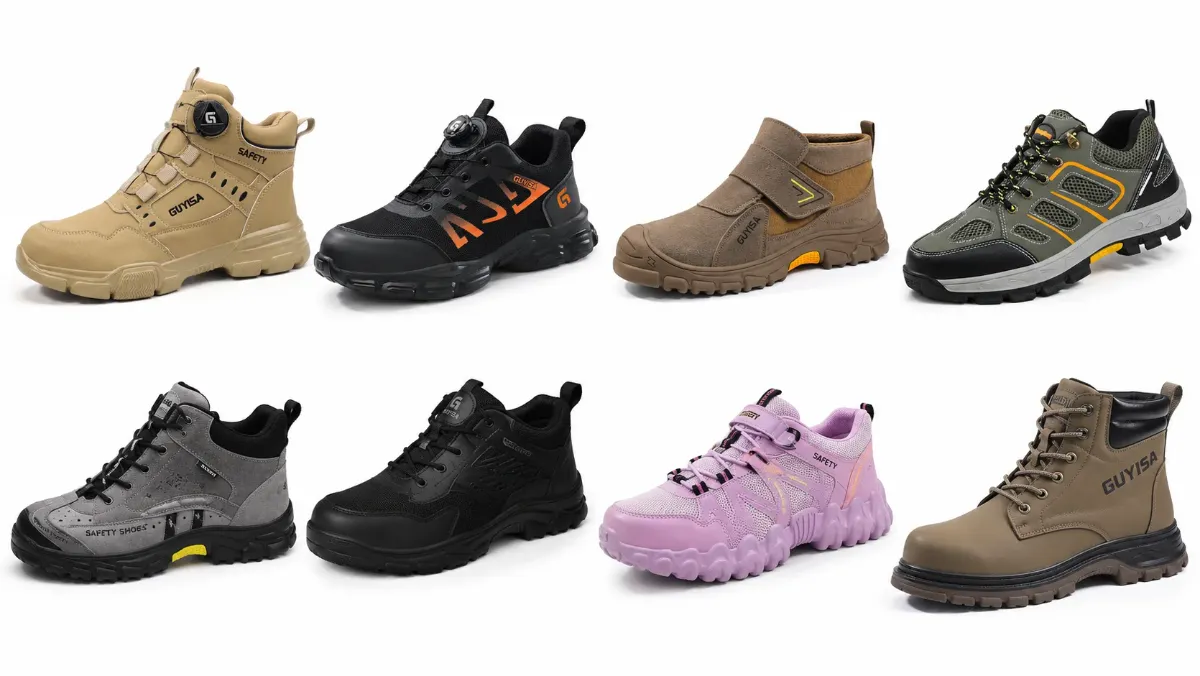
The wrong safety shoes cost you twice — once at purchase, once when they fail. This guide covers every feature that matters in the Guyisa range, available through Armor Sole, Zimbabwe’s exclusively authorised Guyisa agent.
What Job Do You Do? Start Here
Different jobs have different risks. The risk decides the shoe.
| Job / Environment | Main Risk | What You Need |
|---|---|---|
| Construction, factory | Falling objects + nails | Steel toe + Kevlar midsole |
| Electrical work | Electric shock | 10KV insulated sole + plastic toe |
| Welding | Heat, sparks | Heat-resistant sole + high-top |
| Kitchen, hospitality | Wet and oily floors | Anti-slip sole |
| Warehouse, security | Mixed risks + long hours | Steel toe + HI-POLY insole |
| Mining, outdoor sites | Uneven ground + impact | High-top + ankle support |
| Light work, long shifts | Fatigue + all-day wear | Lightweight + breathable upper |
What Is a Kevlar Midsole — and Why Does It Matter?
The midsole sits between the outer sole and your foot. Its job: stop sharp objects — nails, screws, glass shards — from going through the sole into your foot.
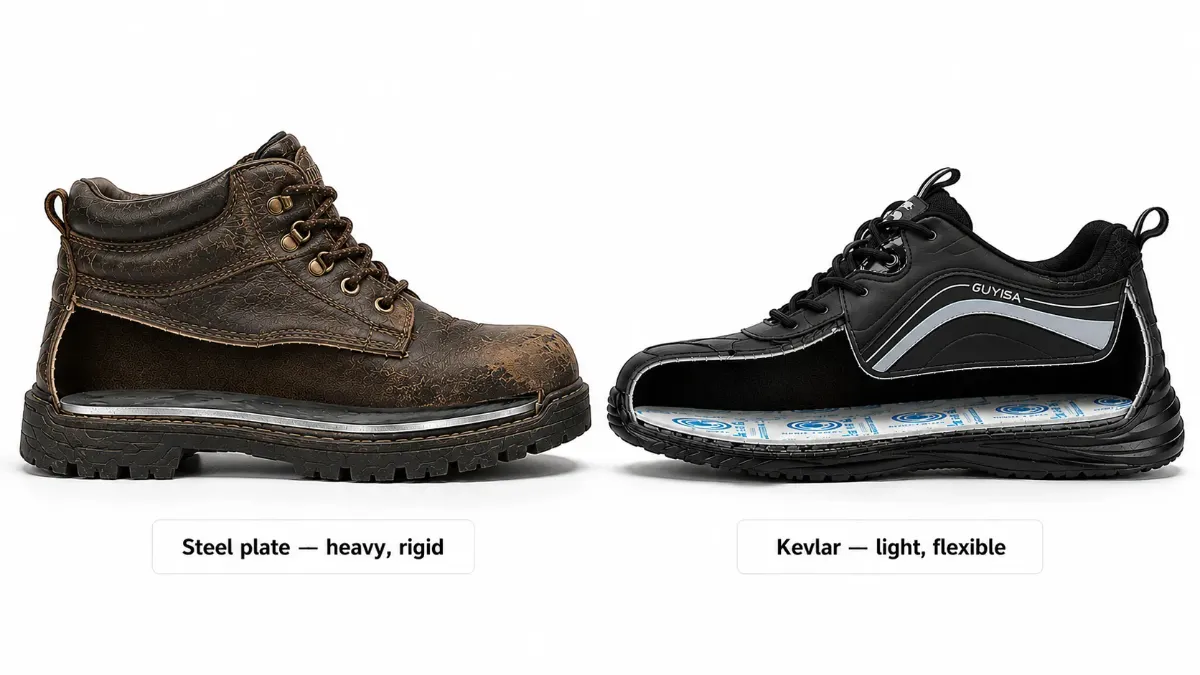
Older safety boots use a rigid steel plate. It works, but steel is heavy and completely stiff. Your foot fights it all day. By hour six, you feel it.
The majority of the Guyisa range uses Kevlar instead — the same material in bulletproof vests. Kevlar stops sharp objects just as effectively as steel, at a fraction of the weight, and flexes naturally with your foot. A small number of Guyisa models use a steel midsole; those are noted on the product page.
Every Guyisa shoe at Armor Sole carries either a Kevlar or steel anti-puncture midsole. Both are certified. The Kevlar models are lighter and more comfortable for all-day wear.
What Is Microfiber — and Why Is It Better Than Leather?
Most workers in Zimbabwe grew up with leather safety boots. Leather is durable — but it is heavy, stiff, slow to break in, and traps heat.
Guyisa uses microfiber across most of its range. Microfiber is a synthetic material that outperforms leather on daily wear:
- Lighter — reduces overall shoe weight
- Softer from day one — no break-in period
- More water-resistant — does not absorb moisture the way leather does
- Does not crack — leather dries out and splits over time; microfiber holds its shape
Some models combine microfiber with fly-woven fabric — the same breathable mesh construction used in performance sports shoes. Air moves through the upper continuously, keeping feet dry and odour-free through a full shift.
What you will see on Armor Sole product pages:
- Microfiber — most High-Top and Classic models. Durable, lightweight, water-resistant.
- Microfiber + Steel mesh — hybrid construction in parts of the Insulation range, where additional structure is needed around live electrical environments.
- Fly-woven fabric — Sports and Leisure range. Athletic build, maximum breathability.
- Suede — Welder range. Thick, heat-resistant, built for spark and heat exposure.
A small number of Guyisa models use leather — traditional in finish, heavier in wear. For most jobs, microfiber or fly-woven mesh is the better choice.
Steel Toe vs Plastic Toe: Which Do You Need?
Most Guyisa safety shoes have a steel toe cap — the right choice for the majority of jobs involving falling objects, heavy machinery, or physical impact.
The exception: electrical work.
Steel conducts electricity. If you are an electrician or work around live cables and equipment, a steel toe cap is not just ineffective — it is a hazard. Electrical current can travel through a steel cap and into your body. The result can be fatal.
The Guyisa Insulation range uses a non-conductive plastic toe cap instead. It delivers the same impact protection as steel, without completing a circuit. Combined with the insulated sole, every part of the shoe is kept out of the electrical path.
One exception within the Guyisa range: the Chef category does not include a toe cap. Kitchen environments prioritise comfort, slip resistance, and all-day wear — the risk profile is different.
What Sole Do You Need?
Rubber sole — durable, oil-resistant, grips on most surfaces. Found across multiple categories.
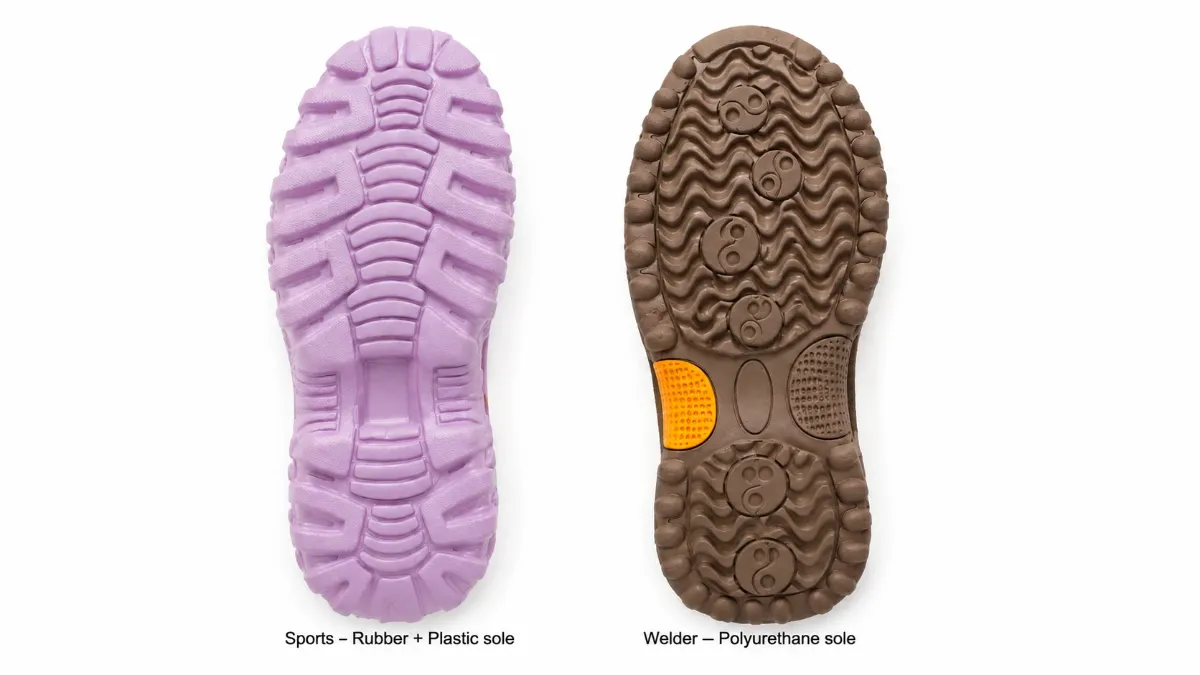
Rubber and plastic sole — combination construction found on some Sports models like the AS5703. Lightweight, good grip, suited for mixed indoor and outdoor wear.
Polyurethane (PU) sole — found on Welder models like the AW7203. Cushioned, heat-resistant, durable on hard floors.
Non-conductive rubber sole (10KV) — Insulation range only. Electrically insulating rubber compound, rated to withstand 10,000 volts. Looks similar to standard rubber but the material is fundamentally different — it does not conduct electricity. Most Guyisa insulation models are rated 10KV; one or two models are rated 5KV, noted on the product page. Non-negotiable for anyone working near live voltage.
Anti-slip sole — deep tread engineered for wet, oily, and smooth floors. Kitchens, food factories, hospitality.
HI-POLY insole — the cushioned insole inside every Guyisa shoe. Absorbs impact on concrete and hard floors. Reduces foot fatigue on long shifts. It is why Guyisa shoes feel noticeably different from cheaper alternatives after hour six.
High-Top vs Low-Cut
Low-cut — ends below the ankle. Lighter, more movement. Right for flat indoor environments: factories, kitchens, warehouses.
High-top — rises above the ankle. Braces against rolls and impacts on uneven terrain. Construction sites, mines, farms, outdoor work.
The Guyisa High-Top range starts at $50. Kevlar midsole and microfiber upper keep them significantly lighter than traditional high-top boots — worn all day without the ankle fatigue that comes from old-style rigid boots.
Protection Ratings: S1, S2, S3 — What They Mean
When you see S1, S2, or S3 on a safety shoe, it tells you the level of protection the shoe has been independently tested for. Each class builds on the previous:
SB — basic. Steel toe only, tested to 200 joules of impact force. That is the equivalent of a 20kg object falling from one metre.
S1 — SB plus anti-static properties and energy absorption at the heel. Minimum for most Zimbabwean work environments.
S2 — S1 plus water-resistant upper. Important for outdoor work and wet environments.
S3 — S2 plus anti-puncture midsole and cleated sole. Required for construction and mining. The highest standard for most civilian work environments.
The rating is stamped inside the shoe alongside the CE and EN ISO 20345 marks. If there is no rating — there was no independent test.
Guyisa Certifications: What the Marks Mean
Guyisa is certified as a brand — every shoe is manufactured under these certified standards. Not every individual model carries all marks on the shoe itself. What matters is the brand certification, not a stamp on every unit — and that is what separates Guyisa from uncertified alternatives flooding the market.
CE Mark — European conformity. Mandatory for PPE in regulated markets.
EN ISO 20345 — the international safety footwear standard. Tests toe impact at 200 joules, compression at 15kN, and slip resistance.
ASTM F2413 — the American standard for protective footwear.
UKCA Mark — UK conformity assessed. Required for PPE placed on the Great Britain market.
A+A Innovation Award — recognised at A+A Düsseldorf, the world’s leading safety and health trade fair. An independent industry award, not a marketing claim.
The Full Guyisa Range at Armor Sole
| Industry | Minimum Rating | Key Features | Guyisa Range |
|---|---|---|---|
| Mining | S3 | Steel toe, anti-puncture, high-top | High-Top |
| Construction | S3 | Steel toe, anti-puncture, ankle support | Tooling, High-Top |
| Electrical | Insulation 10KV | Plastic toe, insulated, anti-static | Insulation |
| Welding | Heat resistant | Heat-resistant sole, no lace hooks | Welder |
| Hospitality | S1 | Non-slip, oil resistant, comfortable | Chef |
| Agriculture | S2 | Waterproof, anti-puncture | Trekking |
| Healthcare | S1 | Non-slip, chemical resistant | Leisure |
| Manufacturing | S1–S2 | Steel toe, anti-static, oil resistant | Sports, Classic |
| Light work | S1 | Comfort, all-day wear | Leisure |
| Mixed environments | S2 | Versatile protection | Multi-Function |
$5 flat delivery to every city, town, and growth point in Zimbabwe.
Checklist Before You Order
- Matches the main risk at my job
- Steel toe or plastic toe (electrical = plastic, no exceptions)
- Sole type matches my surface — rubber, non-conductive, or anti-slip
- Protection rating — S1 minimum, S3 for construction and mining
- High-top or low-cut for my terrain
- Certifications listed on the product page
- One size up from usual — recommended for all safety shoes with a toe cap
Browse the full Guyisa range — from high-top steel toe boots to lightweight sports safety shoes, delivered anywhere in Zimbabwe.